

Advantages of Using Synthetic Cable
Think about the last time you handled a steel cable. You probably remember its weight, the rough feel, and maybe even those sharp, broken wire that tear up gloves and hands. For decades, we’ve accepted these disadvantages as the price for strength. But with the advances in cable technology, synthetic options have changed the game and synthetic cable is a clear upgrade.
A modern material (UHMWPE) is proving to be the best alternative to steel wire rope: synthetic cable. These advanced ropes challenge everything we assume about strength. In practice, they are not only significantly stronger than steel of the same size, but they are also so light they can float on water.
This massive upgrade offers more than just convenience; it creates a huge leap in safety. A snapped steel cable releases deadly energy, while a synthetic line simply falls to the ground. These advantages make synthetic cable key to working smarter and safer.
Stronger and Lighter Than Steel
For decades, the rule has been simple: heavier means stronger. Your mind probably pictures a thick, heavy steel cable for towing a truck or lifting an engine. Modern synthetic ropes, made from incredibly advanced fibers, flip that idea on its head. Pound for pound, a high-quality Tactical Recovery Equipment synthetic rope is significantly stronger than a steel cable of the exact same thickness. This isn’t a slight improvement; it’s a game-changing leap in material science, with synthetic cable outperforming the alternatives.
The difference is staggering when you handle them. A typical 80-foot steel winch line can weigh over 30 pounds and is a stiff, awkward beast to manage. The equivalent synthetic rope often weighs less than 5 pounds—so light it floats. Imagine swapping a heavy piece of industrial equipment for something you can carry with one hand. That’s the real-world difference, making setup and pack-up faster and far less of a chore, which is why synthetic cable is becoming the preferred choice.
This incredible strength-to-weight advantage isn’t just about convenience. For anyone using a winch on a 4×4 or managing lines on a boat, shedding 25+ pounds of dead weight from the front of your vehicle or the top of your mast matters. It’s less strain on you and your equipment. But the benefits of this modern material go far beyond just saving your back; its most important feature is how it keeps you safe—and synthetic cable is leading the way in safety.
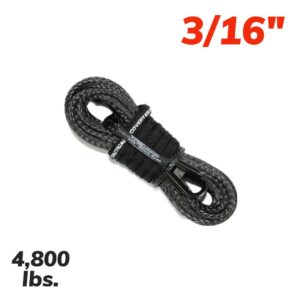
3/16 Synthetic Winch Rope – 4,800 lbs. Breaking Strength – Replacement Winch Rope for small winches up to 3,500 lbs.
$29.95
Select options
This product has multiple variants. The options may be chosen on the product page
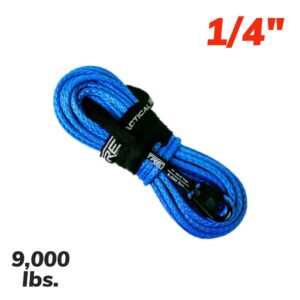
1/4″ Synthetic Winch Rope – 9,000 lbs. Breaking Strength – Replacement Winch Rope for ATV, UTV and winches up to 5,000 lbs.
$59.95
Select options
This product has multiple variants. The options may be chosen on the product page
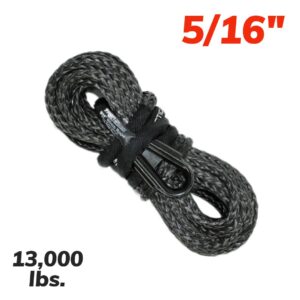
5/16 Synthetic Winch Rope – 13,000 lb. Breaking Strength – Replacement Winch Rope for 5,000 lb. to 9,000 lb. Winches
Price range: $74.95 through $225.00
Select options
This product has multiple variants. The options may be chosen on the product page
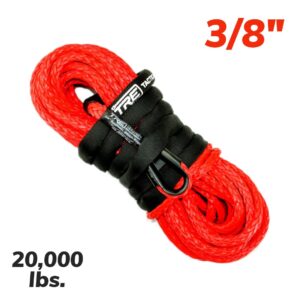
3/8″ Synthetic Winch Rope – 20,000 lb. Breaking Strength – Replacement Winch Rope for 6,000 – 12,000 lb. Winches
Price range: $109.95 through $325.95
Select options
This product has multiple variants. The options may be chosen on the product page
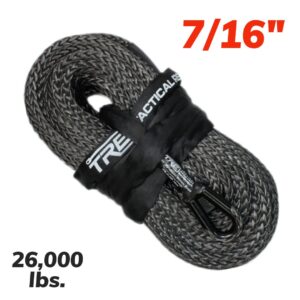
7/16″ Synthetic Winch Rope – 26,000 lb. Breaking Strength – Replacement Winch Rope for 10,000 lb. to 17,500 lb. Winches
Price range: $224.95 through $249.95
Select options
This product has multiple variants. The options may be chosen on the product page
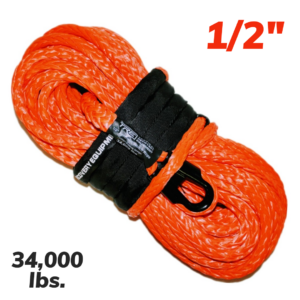
1/2″ Industrial Synthetic Winch Rope – 34,000 lb. Breaking Strength – Industrial Winch Rope winches over 15,000 lbs.
Price range: $174.95 through $339.95
Select options
This product has multiple variants. The options may be chosen on the product page

Winch Drum Attachment Kit – 5/16, 3/8 & 7/16 Synthetic Winch Rope
$9.95
Add to cart
Why Synthetic Cable Won’t Snap Back: The Single Biggest Safety Advantage
The single most important difference between steel and synthetic isn’t strength or weight—it’s what happens when the cable breaks. We’ve all seen dramatic videos or heard warnings about a tow strap snapping. With a steel cable, this event is incredibly dangerous. The metal stores a phenomenal amount of energy when stretched, and if it fails, it releases that energy in a violent, unpredictable explosion known as “snap-back.” The broken ends of the cable can whip through the air faster than the eye can see, capable of causing devastating damage or fatal injury to anyone nearby. Most importantly, as synthetic cable is engineered differently, it does not snap back in this manner, vastly improving safety.
Think of a steel cable like a massive, heavy rubber band. The more you pull on it, the more energy it holds. A synthetic rope, however, is the exact opposite. Because it has very little stretch, it stores almost no energy. If it ever reaches its breaking point—which is already higher than steel’s—it doesn’t explode. It simply breaks and falls to the ground. This one property makes synthetic rope profoundly safer for winching, towing, and recovery situations, giving you peace of mind that a failure won’t turn into a catastrophe. Especially in stressful operations, using synthetic cable ensures you avoid many risks associated with steel.
No Rust, No Splinters, No Problem: The Everyday Perks
Safety is paramount, but the day-to-day experience of using synthetic rope is what truly wins people over. Anyone who has handled an old steel cable knows the routine: heavy, greasy, and prone to developing sharp, broken wires that can easily slice through unprotected hands. Synthetic fiber rope (UHMWPE) completely eliminates these headaches. It’s clean to handle, remarkably flexible, and won’t leave you with rust stains all over your hands, boat deck, or vehicle. On top of all this, synthetic cable remains safe and easy to work with.
This improved handling translates into real-world convenience every time you use it. Consider the practical perks:
- No Rust or Corrosion: It’s immune to rust, making it perfect for marine environments or wet, muddy recoveries. Owners of synthetic cable enjoy lasting, trouble-free performance.
- No Sharp Wires: You can handle it confidently without thick gloves, saving your hands from painful cuts. The smooth surface of synthetic cable makes a big difference in safety.
- Easy to Spool: Its flexibility makes it far easier to wind neatly onto a winch drum without kinking. Synthetic cable reliability shines in both handling and storage.
- It Floats: A floating rope is a game-changer for boating and off-road water crossings, as it’s much easier to retrieve and won’t snag on the bottom. In rescue and marine scenarios, the advantage of synthetic cable cannot be ignored.
Is Synthetic Cable Worth It? A Clear Answer
While synthetic rope often has a higher price tag than steel, the upgrade in safety and convenience makes it a smart investment, not just an expense. You’re trading an upfront cost for an end to wrestling with heavy, rusty cable and, most importantly, for peace of mind when it matters most. When weighing these advantages, choosing synthetic cable is clearly worthwhile.
Ultimately, you aren’t just buying a different kind of rope; you’re buying a better, safer experience for your truck, boat, or farming equipment, and synthetic cable delivers on all fronts.
